
Welcome to Pollinator Pathway NW Seattle
We are following in the footsteps of Sarah Bergman who started the first Pollinator Pathway on Columbia St. in Seattle, WA., in 2007. We hope to build upon her legacy.
We would like to acknowledge we are living and working on the unceded ancestral grounds of the Duwamish peoples. We honor their legacy of caring for the land, plants and animals.
Seattle has an industrial history and there are now large areas in need of habitat restoration. Along with urban neighborhood pathway projects, we hope to emphasize the use of pollinator friendly plantings to aid in restoration of vital habitat, and develop urban public gardens as part of the larger Pollinator Pathway.
Sarah Bergmann's Vision
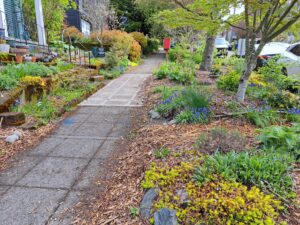
The original pollinator pathway was conceived by Sarah Bergmann in 2007, and is located near Seattle University. Her vision called for plantings in front yards and along strips of land between the sidewalk and the street, creating a pathway of continuous gardens.
The pollinator pathway idea has now become a global movement. The current approach is to plant continuous corridors of native pesticide-free plantings that are friendly to pollinators. Connecting our yards, parks, orchards and trails creates a continuous pathway for pollinators.
Tulatuwx Restoration Site
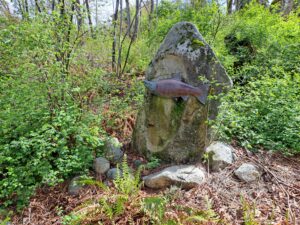
The original Tulatuwx, previously known as Terminal 105, is a park and habitat restoration site that was established by the Port of Seattle in the early 1990’s. Its prior industrial use as a marine service and painting facility had left it heavily polluted with chemicals and industrial debris. For thousands of years the Duwamish lived in longhouses located nearby and used the area for fishing. The name, Tulatuwx, means Herring House in the Lushootseed language.
Restoration on the site began in 1995 with a partnership between the Port of Seattle, People for Puget Sound and Earth Corps. After clearing and excavating the site, volunteers began converting the property to a self-sustaining reforested habitat. That work continues to this day with efforts to resurrect the salmon population.
The site is currently maintained by The Port of Seattle and Friends of Tulatuwx. It has blossomed into a restored habitat and riparian zone providing support for native plants, shelter for migrating salmon, pollinator friendly plantings and habitat for birds and small mammals. Three pollinator sites within Tulatuwx have been built within the last six years.
Lake Union Pathway
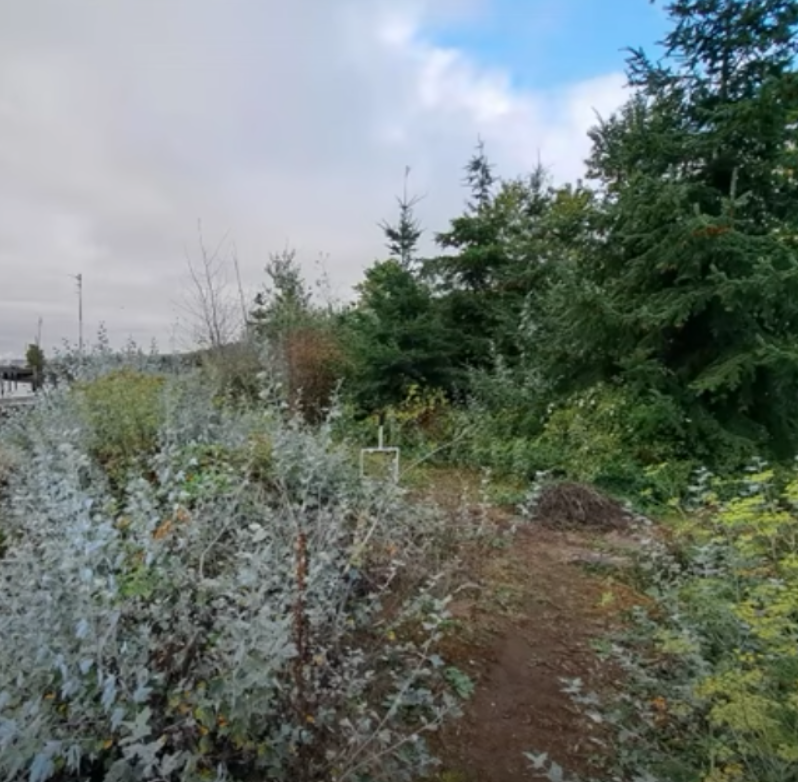
The pathway around Lake Union is a connection between residences, businesses and industrial settings. It attracts bikers and pedestrians, and is connected to the shore by access points with potential for habitat restoration and pollinator friendly plantings. PPNW Seattle sees opportunities to strengthen the importance of these access paths as they relate to the built environment by creating habitat that attracts pollinators.